Mushroom and Gruyère Omelette (Quick French-Style Breakfast)
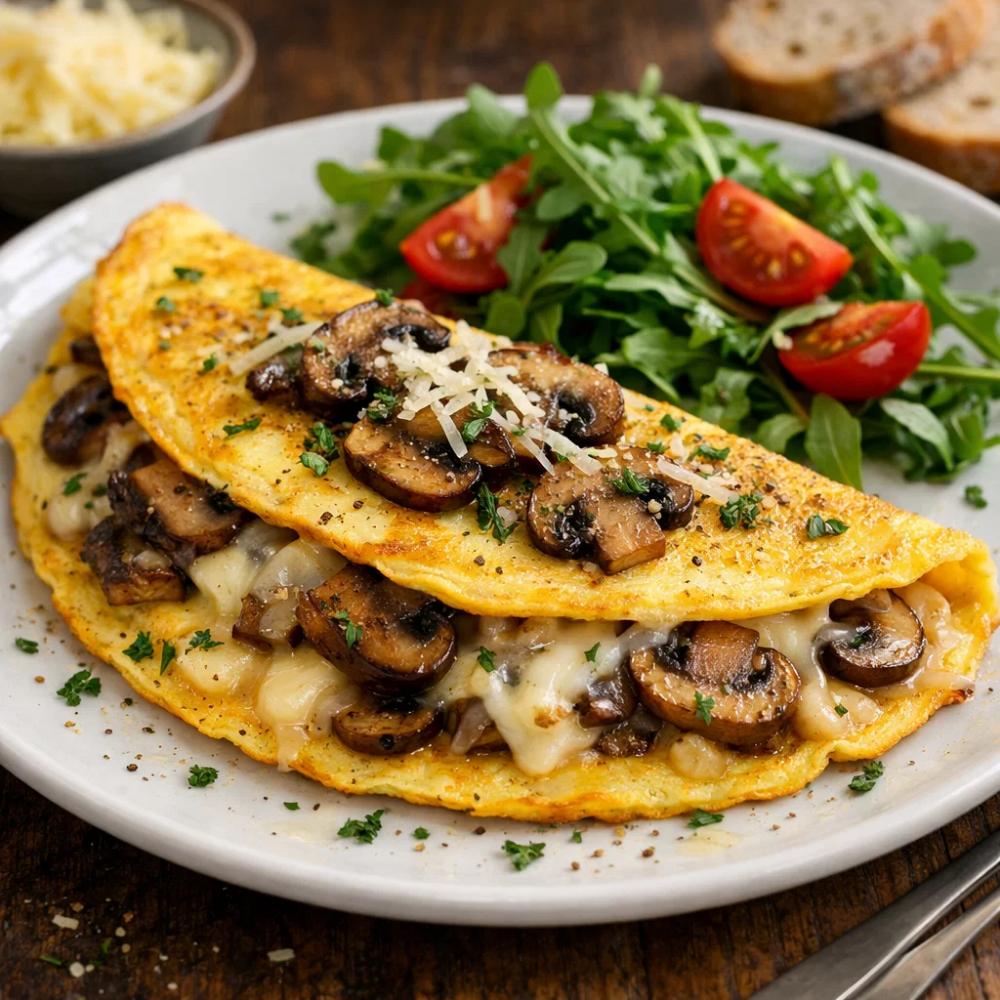
A classic French omelette — pale golden, barely set, and folded around a filling of sautéed mushrooms and melted Gruyère. Ready in 10 minutes; the technique is what makes it.
What is this dish?
The French omelette is not scrambled eggs that have been folded — it's a distinct technique that produces pale, tender, barely-set eggs wrapped around a filling. Sautéed mushrooms and melted Gruyère is the definitive savoury filling.
Why you'll love it
It takes 10 minutes, uses 4 ingredients, and when executed correctly produces one of the most satisfying breakfasts in any cuisine. Mastering the French omelette technique is one of the most rewarding basic cooking skills.
When to serve
A quick weekday breakfast or weekend brunch. Elegant enough for guests. Make individual omelettes to order — they're very fast once the filling is prepared.
Quick tips
High heat. Work fast. Pale exterior — not golden. A 20cm pan for 3 eggs. Serve immediately.
Eggs
Three large eggs per omelette. Beat vigorously until completely homogenous. Fresh eggs produce a paler, more tender result.
Gruyère
The ideal omelette cheese — it melts smoothly into a creamy, pooling filling. Its nutty sweetness pairs perfectly with mushrooms.
Chestnut Mushrooms
More flavourful than button mushrooms. Must be cooked dry before going into the omelette — moisture makes the filling watery and prevents proper folding.
Substitution Options
Replace Gruyère with Comté, Emmental, or a sharp Cheddar. Use any mushroom variety — shiitake, oyster, or portobello. Add a small amount of wilted spinach with the mushrooms. For a plain omelette (fines herbes), skip the filling and add chives, tarragon, chervil, and parsley to the beaten eggs.
Step-by-Step Instructions
Cook the mushrooms
Heat half the butter in a 20cm non-stick pan over medium-high heat. Add the sliced mushrooms and cook without stirring for 2–3 minutes until golden on one side. Toss, add the garlic, season with salt and pepper, and cook for another 2 minutes until all moisture has evaporated. Add the fresh thyme and remove from the pan to a plate.
Pro Tips:
- •Don't stir the mushrooms for the first 2–3 minutes — let them brown on one side first.
- •Mushrooms must be dry before going into the omelette — excess moisture makes it soggy.
Beat the eggs
In a bowl, beat the 3 eggs vigorously with the cold water, a pinch of salt, and pepper until completely homogenous and slightly frothy — about 30 seconds. The water creates steam during cooking and helps the omelette stay tender.
Pro Tips:
- •Beat more vigorously than for scrambled eggs — you want air incorporated.
- •Season the eggs before cooking, not after — they absorb seasoning better raw.
Cook the omelette
Wipe the pan and return to high heat. Add the remaining butter. When it foams and is about to turn golden, pour in all the eggs at once. Shake the pan constantly while using a fork to draw the edges to the centre, letting liquid egg flow underneath. When the egg is almost set but still slightly glossy on top — about 1–1.5 minutes — stop shaking.
Pro Tips:
- •High heat and constant movement are the hallmarks of a French omelette.
- •The whole cooking process after adding eggs takes under 2 minutes — work with confidence.
Add filling and fold
Scatter the Gruyère down the centre of the omelette and top with the mushrooms. Using the spatula, fold one third of the omelette over the filling. Tip the pan away from you and roll the omelette onto a warm plate so it lands seam-side down, folded in thirds. The exterior should be pale golden, not brown.
Pro Tips:
- •A proper French omelette is pale — if it colours on the outside it was cooked too long.
- •Serve immediately — omelettes wait for no one.
Chef's Tips
Techniques that separate good from great
Use a 20cm pan exclusively for omelettes
Pan size is critical. A 20cm pan produces the right egg thickness for 3 eggs. A pan that's too large makes a thin omelette that overcooks before you can fold it; too small and it puffs up and never sets properly on top.
The fork shake technique
Use a fork (not a spatula) to draw the cooked egg from the edges towards the centre during the first 30 seconds, while shaking the pan constantly. This creates the layered, tender interior of a classic French omelette — flat-cooking eggs without moving produces a firmer, less delicate result.
Warm the plate first
A French omelette goes cold extremely fast. Warm your plate in the oven or under hot water for 1 minute before plating — the omelette will stay at the right temperature long enough to eat without rushing.
Gruyère over Cheddar for authenticity
Gruyère melts with exceptional smoothness and has a nutty, slightly sweet flavour that complements mushrooms and eggs perfectly. Cheddar can be substituted but produces a stronger, less refined flavour. Comté is an equally good alternative to Gruyère.
Nutrition Facts
Equipment Needed
- 20cm non-stick frying pan
- Silicone spatula
- Fork
- Mixing bowl
Quick Tips
- A proper French omelette is pale yellow, not brown — if the outside colours, reduce the heat.
- Work fast — the entire egg cooking process takes less than 2 minutes at high heat.
- A 20cm pan for 3 eggs is the correct size — a larger pan produces a thinner omelette that overcooks.
Recipe Variations
Different ways to make this dish your own
Fines Herbes Omelette
The classic plain French omelette — no filling, just chives, tarragon, chervil, and flat-leaf parsley mixed into the beaten eggs.
Spinach and Feta Omelette
Replace mushrooms with 60g of wilted spinach (squeeze very dry) and 30g of crumbled feta cheese.
Smoked Salmon Omelette
Fill with 50g of cold-smoked salmon, a teaspoon of crème fraîche, and fresh dill. No cooking required for the filling.
Tomato and Basil Omelette
Fill with 2 tablespoons of slow-roasted tomatoes and torn fresh basil. Add a sprinkle of Parmesan.
What to Serve With
Perfect pairings to complete the meal
Simple Green Salad
A lightly dressed green salad with lemon vinaigrette provides freshness and contrast alongside the rich omelette.
Crusty Baguette
A small piece of warm baguette alongside is the classic French pairing for any omelette.
Fresh Tomato Salad
Ripe tomatoes dressed simply with olive oil, salt, and basil make a clean, bright accompaniment.
Black Coffee
The French way — a small, strong black coffee alongside a classic omelette is one of the great simple breakfast combinations.
Storage & Make-Ahead
Keep it fresh and plan ahead
Refrigerator
Omelettes are best eaten immediately. If necessary, cover and refrigerate for up to 1 day — the texture changes significantly.
Freezer
Not suitable for freezing.
Make-Ahead
The mushroom filling can be made up to 2 days ahead and refrigerated. Make the omelette to order.
Reheating
Not recommended — reheat gently in a pan if necessary, but the texture is always better fresh.
Be the first to review this recipe!
Got Leftovers?
Turn what you already have in your fridge into delicious meals. Our AI-powered generator creates personalized recipes from your ingredients.
Browse more like this:
You Might Also Like
Discover more delicious recipes similar to what you're cooking