French Crêpes (Classic Thin Pancakes with Lemon and Sugar)
Light, paper-thin French crêpes made with a simple flour, egg and milk batter rested for 30 minutes. Golden at the edges, tender in the centre — served with lemon juice and caster sugar in under 30 minutes.
What is this dish?
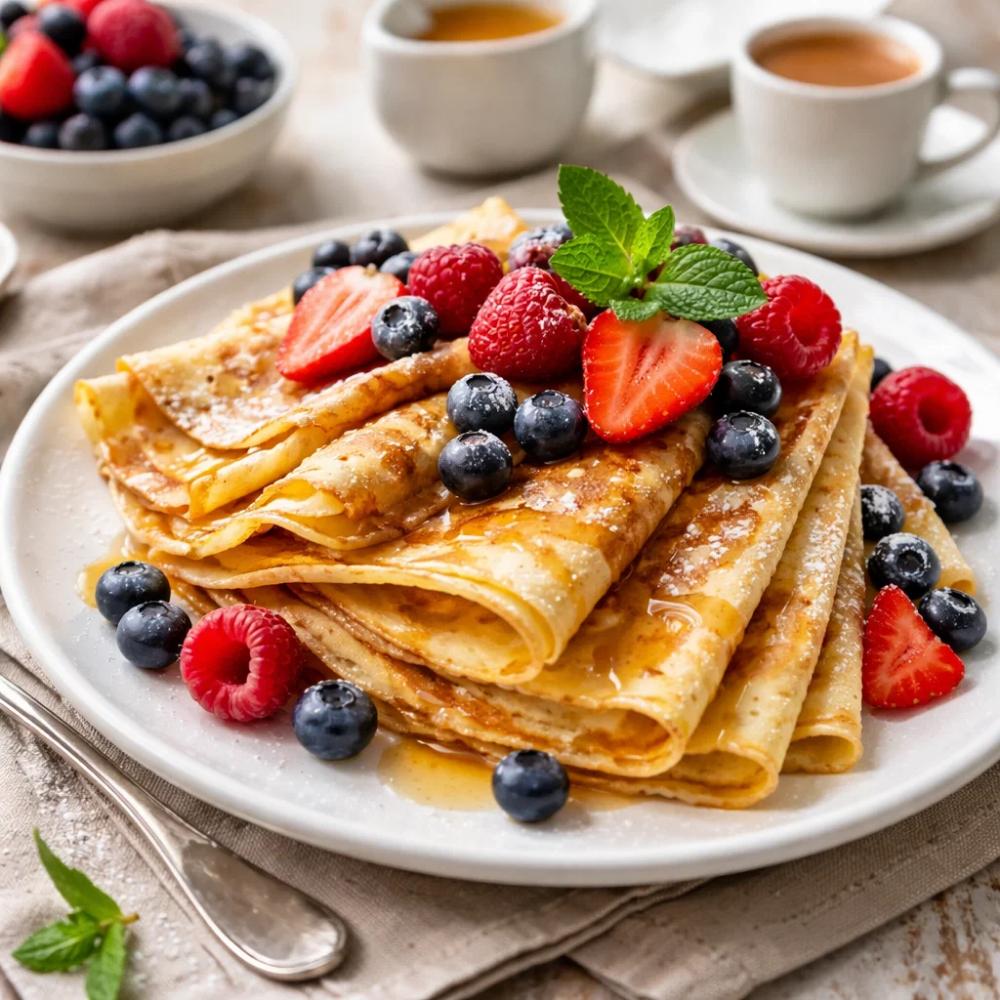
French crêpes are paper-thin pancakes made from a simple batter of flour, eggs, milk and butter. They are far thinner and more delicate than American-style pancakes — cooked quickly in a hot pan and served with lemon and sugar, Nutella, or savoury fillings. The batter takes 5 minutes to make and benefits from a 30-minute rest.
Why you'll love it
One batter, endless options — sweet with lemon and sugar or Nutella, or savoury as galettes with cheese and ham. They are fast, inexpensive, and reliably impressive. The technique looks harder than it is.
When to serve
Weekend brunch, Pancake Day (Shrove Tuesday), or a quick midweek breakfast. Scale easily for a crowd — one batch makes 8–10 crêpes.
Quick tips
Rest the batter at least 30 minutes. Get the pan properly hot before the first crêpe. Pour less batter than you think you need. Swirl immediately.
Plain Flour
All-purpose plain flour — not self-raising. The batter needs no leavening; crêpes derive their delicacy from thin spreading, not rising.
Whole Milk
Full-fat milk gives a richer, more pliable crêpe. Semi-skimmed works but produces a slightly thinner, less golden result.
Melted Butter
Goes into the batter and coats the pan. Both uses are essential — the butter in the batter prevents sticking and gives a golden colour; the pan butter provides the characteristic golden edges.
Substitution Options
Use plant-based milk (oat or almond) and vegan butter for a dairy-free version. Replace plain flour with buckwheat flour for savoury galettes — reduce milk slightly as buckwheat absorbs more liquid. Add a teaspoon of vanilla extract for a more aromatic sweet crêpe.
Step-by-Step Instructions
Make the batter
Sift the flour and salt into a large bowl and make a well in the centre. Add the eggs and half the milk. Whisk from the centre outward until smooth, then whisk in the remaining milk and melted butter. The batter should be the consistency of single cream with no lumps.
Pro Tips:
- •Whisking from the centre outward prevents lumps forming.
- •Add milk in two stages for the smoothest batter.
Rest the batter
Cover the bowl with cling film and rest at room temperature for at least 30 minutes. This allows the flour to fully hydrate and the gluten to relax, giving more tender, less rubbery crêpes.
Pro Tips:
- •Rested batter produces noticeably more tender crêpes.
- •You can rest overnight in the fridge — just whisk briefly before using.
Heat the pan
Place a 20–22cm non-stick frying pan over medium-high heat. Add a small knob of butter and swirl to coat the base. The butter should foam and then subside — that is when to pour in the batter. The first crêpe often sticks slightly and is the cook's reward.
Pro Tips:
- •A properly hot pan is critical — if the pan is too cold the batter spreads slowly and turns pale.
- •A dedicated crêpe pan with low sides makes flipping far easier.
Cook the crêpes
Pour 3–4 tablespoons of batter into the pan and immediately tilt and swirl in a circular motion to spread into a thin, even circle. Cook for 60–90 seconds until the edges look dry and lacy and the underside is golden. Flip with a palette knife and cook for 30 seconds more.
Pro Tips:
- •Less batter is better — err on the side of too thin.
- •The edges will start to lift and look papery when ready to flip.
Stack and serve
Stack crêpes on a warm plate as you go — they will not stick to each other. Squeeze lemon juice over each crêpe, dust with caster sugar, and fold into quarters or roll into a cylinder. Serve immediately.
Pro Tips:
- •Add a small knob of butter to the pan between crêpes but not too much — excess butter causes uneven browning.
- •If the batter thickens as it sits, whisk in a splash of milk to loosen.
Chef's Tips
Techniques that separate good from great
Get the pan temperature exactly right
Too cold and the batter spreads sluggishly and turns pale. Too hot and it sets before you can swirl. Medium-high heat, with the butter just past foaming and subsiding, is the sweet spot. The first crêpe is your temperature test.
Rest the batter — it makes a real difference
Rested batter produces crêpes that are more tender and flexible. The gluten in the flour relaxes during the rest, and the flour fully hydrates. Crêpes made with unrested batter tear more easily when folding and have a slightly doughy bite.
Use a ladle and tilt immediately
Have your tilting motion practised before you pour. Pour into the centre of the pan, then immediately pick the pan up and tilt in a sweeping circular motion. The batter sets quickly — you need to spread it in one smooth movement.
Nutrition Facts
Equipment Needed
- 20–22cm non-stick frying pan or crêpe pan
- Mixing bowl
- Whisk
- Palette knife or spatula
- Ladle or measuring cup
Quick Tips
- The 30-minute batter rest is not optional — it makes crêpes noticeably more tender and less prone to tearing.
- Swirl fast and decisively — once batter hits the pan you have 2–3 seconds to tilt and rotate before it begins to set.
- Butter the pan lightly between crêpes; too much causes uneven browning and a greasy texture.
Recipe Variations
Different ways to make this dish your own
Crêpes Suzette
Fold crêpes into quarters and warm in a pan with orange juice, orange zest, and butter. The classic French dessert version — add a splash of Grand Marnier for the full effect.
Savoury Buckwheat Galettes
Replace plain flour with buckwheat flour and omit the sugar. Fill with ham, a fried egg, and grated Gruyère for a classic Breton galette complète.
Nutella and Banana
Spread the crêpe with Nutella while still warm in the pan, add sliced banana, and fold into quarters. The most popular crêpe stall version worldwide.
Lemon and Ricotta
Fill with sweetened ricotta mixed with lemon zest and a little icing sugar. Fold into quarters and dust with icing sugar to serve.
What to Serve With
Perfect pairings to complete the meal
Lemon juice and caster sugar
The classic British and French way — squeeze half a lemon over the crêpe and dust generously with caster sugar. Simple and perfect.
Fresh berries and whipped cream
A pile of strawberries and raspberries alongside softly whipped cream turns crêpes into an elegant brunch centrepiece.
Hot chocolate
A rich, thick hot chocolate alongside a plate of crêpes is the quintessential Parisian café breakfast. The contrast of bitter chocolate and sweet, delicate crêpes is excellent.
Storage & Make-Ahead
Keep it fresh and plan ahead
Refrigerator
Stack cooled crêpes with greaseproof paper between each layer and wrap in cling film. Keeps for up to 3 days in the fridge.
Freezer
Freeze stacked crêpes (with paper between layers) wrapped tightly in foil. Keeps for up to 2 months. Defrost overnight in the fridge.
Make-Ahead
The batter keeps covered in the fridge for up to 24 hours — whisk briefly before using. Crêpes themselves can be made a day ahead and reheated.
Reheating
Warm individual crêpes in a dry frying pan over medium heat for 30 seconds per side, or wrap a stack in foil and heat in an oven at 150°C for 10 minutes.
Be the first to review this recipe!
Got Leftovers?
Turn what you already have in your fridge into delicious meals. Our AI-powered generator creates personalized recipes from your ingredients.
You Might Also Like
Discover more delicious recipes similar to what you're cooking