Pasta al Pomodoro (Simple Italian Tomato Pasta — 20 Minutes)
The definitive Italian tomato pasta: silky, sweet-savoury San Marzano tomato sauce tossed with al dente pasta and finished with fresh basil and a drizzle of olive oil. Perfect simplicity in 20 minutes.
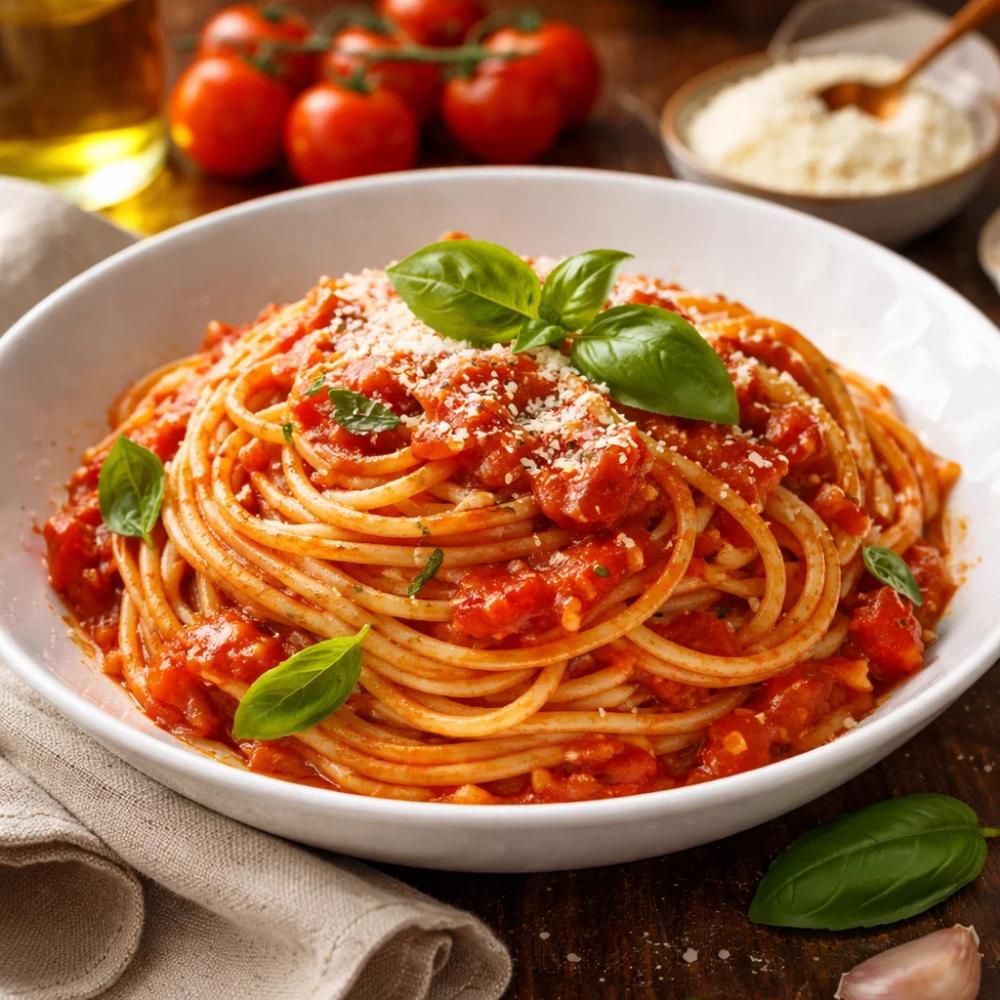
What is this dish?
Pasta al pomodoro is one of the most important dishes in Italian cooking — a simple tomato sauce of garlic-infused olive oil, whole canned tomatoes, and fresh basil tossed with al dente pasta. It forms the basis of dozens of Italian pasta variations and is a fundamental recipe that every cook should master. At its best, with quality tomatoes and good olive oil, it is more satisfying than dishes ten times as complex.
Why you'll love it
This recipe costs under £3 and takes 20 minutes, yet it delivers the flavour of a genuine Italian trattoria when the technique is correct. The key is finishing the pasta in the sauce so it absorbs the tomato flavour, and adding basil off the heat so its fragrance remains alive. Simple, cheap, and genuinely delicious.
When to serve
Pasta al pomodoro is the ideal weeknight dinner when you want something fast, comforting, and satisfying. It works as a starter before a heavier main, as a standalone dinner with salad and bread, or as the base to build a more elaborate pasta dish. Leftover sauce is one of the most useful things to have in the refrigerator.
Quick tips
Use the best canned tomatoes you can find — it matters in a dish this simple. Cook the sauce until the oil separates. Finish the pasta in the sauce. Add basil only off the heat. Always finish with raw olive oil.
San Marzano Tomatoes
The definitive choice for Italian tomato sauce — grown in the volcanic soil near Mount Vesuvius, they are sweeter, less acidic, and less watery than ordinary canned tomatoes. The DOP designation guarantees authenticity. For pasta al pomodoro, where tomato is the only flavour, quality tomatoes are the single most impactful ingredient decision.
Extra Virgin Olive Oil
Used generously both to cook and finish the sauce — first to gently infuse the garlic, then as a raw finishing drizzle at the table. In a sauce this simple, the character of the olive oil is directly perceptible. A good, slightly peppery Sicilian or southern Italian oil is ideal.
Fresh Basil
Added off the heat at the very last moment. The sweet, clove-like fragrance of fresh basil is entirely destroyed by heat. Tearing the leaves rather than slicing prevents oxidation. This is the herb that defines the Italian character of the sauce.
Sliced Garlic
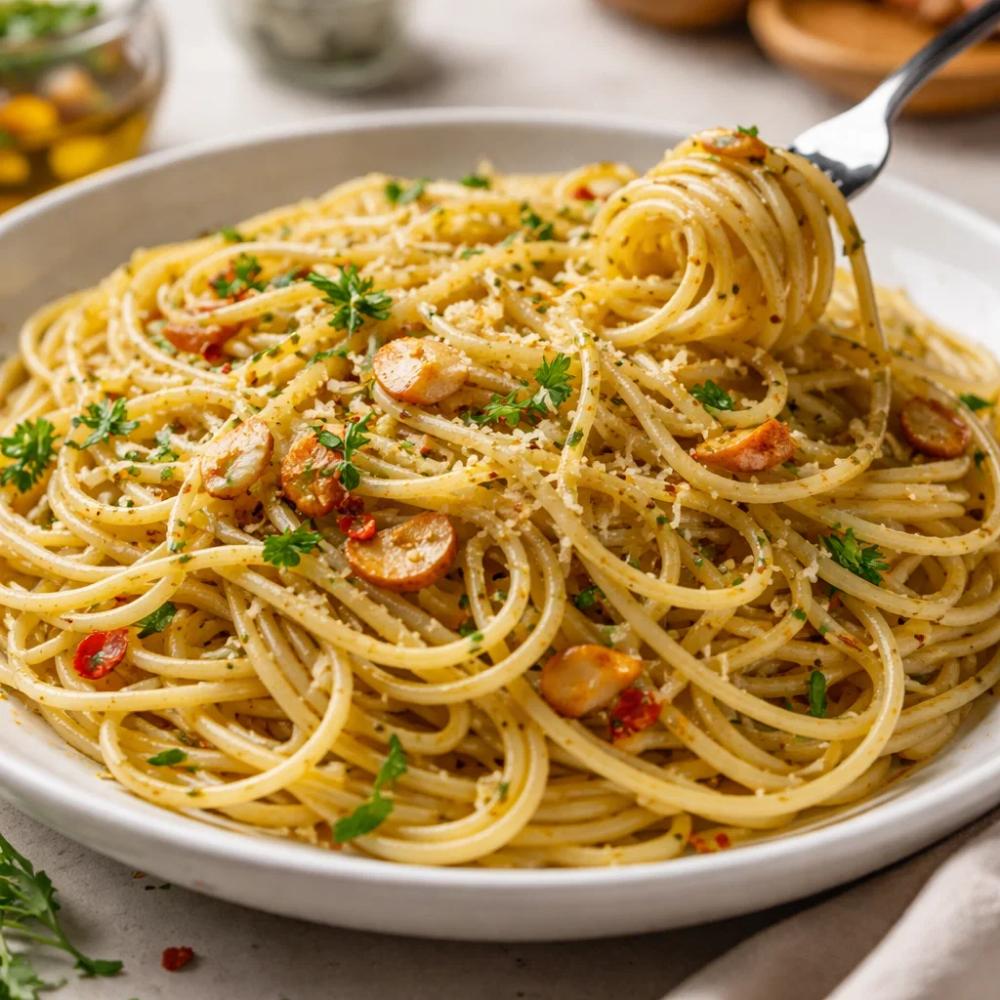
Cooked at low heat in olive oil until pale golden — providing a sweet, nutty base flavour without bitterness. This is the same technique as aglio e olio and produces a far more nuanced garlic flavour than mincing.
Substitution Options
Any good-quality canned whole plum tomatoes can replace San Marzano — taste first for acidity and adjust with a pinch of sugar if needed. Linguine, rigatoni, or penne can replace spaghetti. Dried basil stirred in at the end is significantly inferior to fresh but usable. A pinch of dried oregano adds a slightly different but pleasant variation. For a richer sauce, add 1 tablespoon of tomato paste along with the canned tomatoes.
Step-by-Step Instructions
Make the tomato sauce
Place a large, wide saucepan or skillet over medium-low heat. Add the olive oil and sliced garlic. Cook gently for 2–3 minutes until the garlic turns very pale gold and is fragrant. Add the chilli flakes if using. Pour in the canned tomatoes and use a wooden spoon or your hands to crush them into chunks. Add a generous pinch of salt. Increase heat to medium and cook, stirring occasionally, for 12–15 minutes until the sauce has thickened and the oil has risen to the surface.
Pro Tips:
- •San Marzano tomatoes are sweeter, less acidic, and less watery than standard canned tomatoes — worth the small extra cost for this simple dish where tomato quality is everything.
- •Crushing the tomatoes with your hands before they hit the pan produces more textured, rustic results than using a tin of pre-crushed tomatoes.
Cook the pasta
While the sauce cooks, bring a large pot of water to a rolling boil. Add salt generously. Cook the pasta according to package directions until 1 minute short of al dente. Reserve 1 cup (240ml) of pasta cooking water before draining.
Pro Tips:
- •Start the pasta water boiling before or at the same time as the sauce — they should finish at roughly the same time.
- •The pasta finishes cooking in the sauce, so pulling it 1 minute early prevents it from becoming overcooked.
Finish pasta in the sauce
Transfer the drained pasta directly to the tomato sauce. Add 3–4 tablespoons of pasta water. Toss vigorously over medium heat for 1–2 minutes, letting the pasta finish cooking in the sauce while absorbing its flavour. The sauce should cling to each strand. Add more pasta water if needed to loosen.
Pro Tips:
- •Finishing the pasta in the sauce is the technique that makes Italian tomato pasta taste different from pasta with sauce poured on top — the starch from the water binds the sauce to the pasta.
- •Toss constantly — the agitation creates emulsification.
Add basil and serve
Remove from heat. Tear the basil leaves roughly and toss through the pasta. Taste and adjust salt. Divide between warm plates. Finish each plate with a drizzle of raw extra virgin olive oil and a crack of black pepper.
Pro Tips:
- •Tear basil rather than cutting it — cutting causes oxidation and bruising that turns the leaves black and bitter.
- •The final raw olive oil drizzle is the characteristic Italian finish that adds fresh, grassy fragrance the cooked oil can't provide.
Chef's Tips
Techniques that separate good from great
Cook the sauce until the oil floats on the surface
When a tomato sauce is properly cooked, the olive oil separates and rises to the surface, creating visible orange pools. This is the visual cue that the tomato's water has evaporated sufficiently and the sauce has concentrated and sweetened. Stopping before this point results in a thin, watery, acidic sauce. The separation of oil is the signal that the sauce is ready.
Use whole canned tomatoes, not pre-crushed
Whole canned tomatoes are packed in a simpler liquid and have better flavour and texture than pre-crushed or finely chopped varieties. Crushing them yourself — by hand or with a wooden spoon — gives you control over texture, producing a sauce with character and body rather than a uniform paste.
Finish the pasta in the sauce for 90 seconds
Transferring drained pasta to the tomato sauce and tossing together over heat for 90 seconds with pasta water allows the pasta to absorb the sauce flavour rather than just being coated by it. The starch released from the pasta into the sauce during this step creates a cohesive, glossy coat that cannot be achieved by pouring sauce over plated pasta.
Add basil at the very end, off the heat
Fresh basil contains volatile aromatic compounds — linalool and eugenol — that evaporate very quickly when heated. Adding basil to a hot sauce or pan destroys these compounds within seconds, leaving only the bitter, slightly sulphurous flavour of cooked basil rather than its characteristic sweet, clove-like freshness. Always add it off the heat.
Nutrition Facts
Equipment Needed
- Large pot (for pasta)
- Large wide saucepan or skillet
- Wooden spoon
- Tongs
- Heatproof measuring cup (for pasta water)
- Colander
Quick Tips
- San Marzano tomatoes are the choice for this dish — their low acidity, sweetness, and low water content produce a sauce with a naturally balanced flavour that requires minimal adjustment.
- Do not rush the tomato sauce — it needs the full 12–15 minutes to cook down, concentrate, and for the oil and tomato to separate, which signals it is properly cooked.
- Pasta al pomodoro is entirely defined by ingredient quality. Use the best tomatoes and the best olive oil you can access.
Recipe Variations
Different ways to make this dish your own
Pasta all'Arrabbiata (Spicy)
Double the chilli flakes and omit the basil. Add flat-leaf parsley instead. This fiery Roman variation uses the same tomato base with aggressive heat — one of the classic Italian pasta sauces.
Pasta alla Norma (with Aubergine)
Fry cubed aubergine separately in olive oil until golden and add to the finished tomato sauce. Top with ricotta salata (salted, dried ricotta) instead of Parmesan. Sicily's great pasta dish.
Pasta Puttanesca
Add 2 tablespoons of capers, 8 stoned black olives, and 4 anchovy fillets (which dissolve into the oil) to the garlic stage. A boldly flavoured, briny sauce that requires no cheese.
Pasta al Pomodoro with Burrata
Serve the pasta in bowls with a ball of fresh burrata placed on top. The creamy, milky interior melts into the warm pasta at the table — an indulgent, beautiful contrast to the sharp tomato sauce.
What to Serve With
Perfect pairings to complete the meal
Grated Parmesan or Pecorino
An optional but excellent finish at the table — the salty, aged cheese adds umami depth and creaminess that complements the sharp tomato sauce without overwhelming it.
Crusty Italian Bread
For mopping up the sauce remaining in the bowl — the bread should be dense and crusty enough to act as a utensil. Ciabatta or a sourdough baguette are ideal.
Dry Italian Red Wine (Chianti or Primitivo)
A medium-bodied Italian red with good acidity — such as Chianti or Primitivo — pairs beautifully with tomato-based pasta, its acidity matching and complementing the sauce.
Rocket and Parmesan Salad
A light side salad of rocket dressed with lemon juice and olive oil, finished with shaved Parmesan, provides a fresh, peppery counterpoint to the rich tomato pasta.
Storage & Make-Ahead
Keep it fresh and plan ahead
Refrigerator
The tomato sauce keeps in an airtight container for up to 5 days and improves overnight as the flavours develop.
Freezer
The sauce freezes excellently for up to 3 months. Portion into ice cube trays for small quantities or freezer bags for larger batches. Always cook fresh pasta when serving from frozen sauce.
Make-Ahead
Make a large batch of the tomato sauce and refrigerate or freeze. Fresh pasta is cooked and tossed in the reheated sauce at serving time.
Reheating
Reheat the sauce gently in a pan, adding a tablespoon of water or pasta cooking water to loosen. Always add the freshly cooked pasta to the sauce rather than pouring cold sauce over pasta.
Be the first to review this recipe!
Got Leftovers?
Turn what you already have in your fridge into delicious meals. Our AI-powered generator creates personalized recipes from your ingredients.
Browse more like this:
You Might Also Like
Discover more delicious recipes similar to what you're cooking