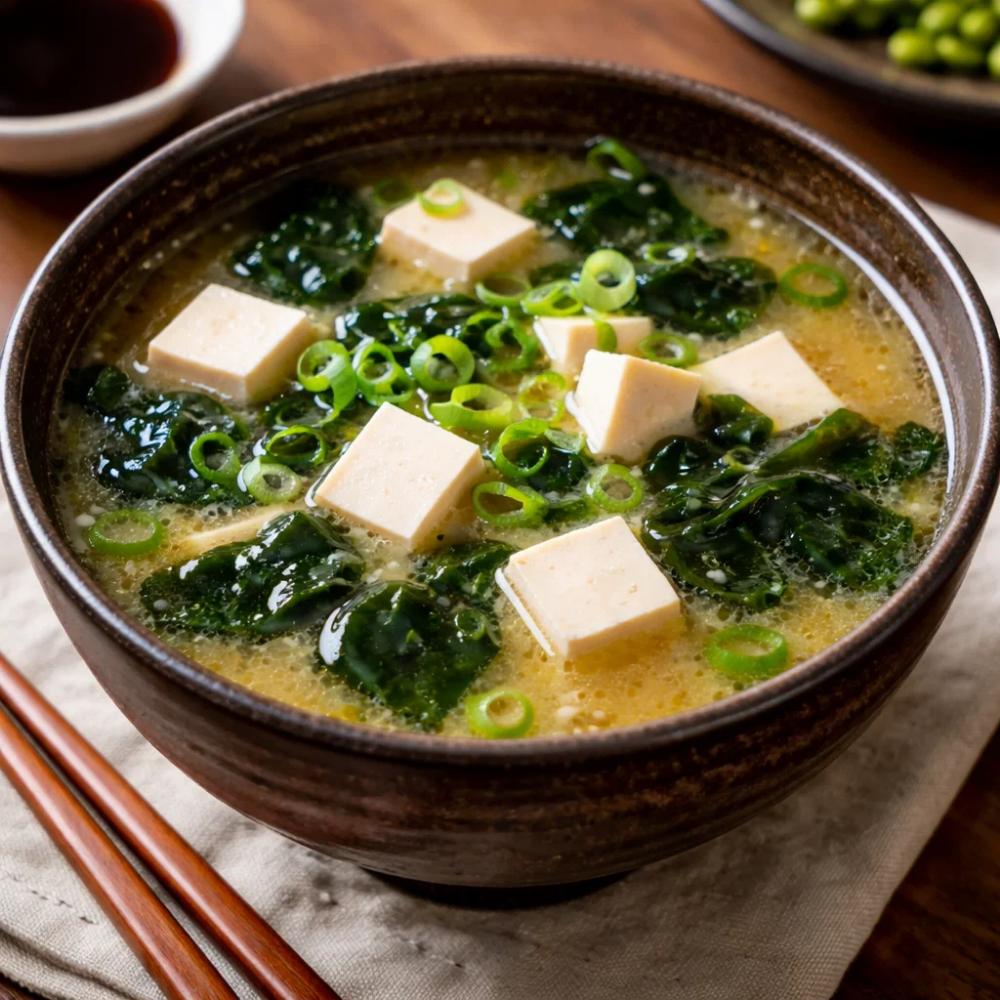
Miso Soup with Tofu and Wakame (Authentic Japanese Recipe)
Japan's most fundamental daily soup — a clean, savoury dashi broth gently stirred with miso paste, soft tofu cubes, and rehydrated wakame seaweed. Deeply nourishing, ready in 10 minutes, and endlessly comforting.
What is this dish?
Miso soup (味噌汁, miso-shiru) is the fundamental daily soup of Japanese cuisine — consumed at almost every meal from breakfast to dinner. At its most basic, it is dashi broth (a clear stock made from kombu seaweed and bonito flakes) gently stirred with miso paste, tofu, and wakame seaweed. It is one of the most efficient soups in the world in terms of nutritional value, flavour complexity, and speed of preparation.
Why you'll love it
Miso soup is ready in 10 minutes, provides genuine probiotic benefit from the miso paste, and costs very little. The combination of clean dashi with the complex, fermented depth of miso creates a flavour that is satisfying out of proportion to its calorie content. It is the ideal light accompaniment to any Japanese meal or a restorative bowl at any time of day.
When to serve
Miso soup is served at every meal in traditional Japanese cooking — alongside rice for breakfast, as part of a bento lunch, or with dinner. In Western cooking it works excellently as a light starter, a warming mid-afternoon bowl, or a restorative drink when feeling tired or unwell.
Quick tips
Remove kombu just before the water boils. Rehydrate wakame separately before adding. Never boil after adding the miso. Dissolve miso through a fine strainer for a smooth soup. Serve immediately.
Miso Paste
Fermented soybean paste that provides the salt, umami, and complex fermented depth of the soup. Available in white (mild, sweet), red (strong, salty), and mixed varieties. Contains beneficial bacteria and enzymes that are preserved only if the soup is never boiled after adding.
Dashi
The clean, savoury Japanese stock that is the base of the soup — made from kombu (dried kelp) which provides glutamates, and bonito flakes (dried fermented tuna) which provide inosinates. These two umami compounds together create synergistic umami, making dashi taste more savoury than either component alone.
Silken Tofu
Almost custard-like in texture — silken tofu has a high water content and delicate, smooth body that is entirely different from firm tofu. It provides protein and an elegant, soft texture that holds up briefly in hot broth without falling apart.
Wakame Seaweed
Dried seaweed that rehydrates in cold water in 5 minutes, swelling dramatically from small flakes into supple, dark green ribbons with a mild, slightly oceanic flavour. Rich in iodine and minerals.
Substitution Options
Instant dashi powder (hondashi) is a widely available and excellent substitute for homemade dashi. Firm tofu replaces silken for a more robust texture. Dried nori sheets (torn into small pieces) can replace wakame in an emergency. Any miso variety works — adjust quantity to taste (red miso is saltier, so use less). A small piece of kombu alone (without bonito) makes a vegan dashi.
Step-by-Step Instructions
Make the dashi (or prepare instant dashi)
For quick dashi: place 10g of kombu in 1 litre of cold water in a saucepan. Heat over medium heat. Just before it reaches a boil (about 5–7 minutes), remove the kombu. Add the bonito flakes, remove from heat, and steep for 3–4 minutes. Strain through a fine sieve. For even faster preparation, use 1 teaspoon of instant dashi powder (hondashi) dissolved in 1 litre of hot water — an acceptable shortcut. For vegan, use kombu-only dashi and omit the bonito flakes.
Pro Tips:
- •Remove the kombu just before the water boils — boiling kombu makes the dashi bitter and slimy.
- •Instant dashi (hondashi) is a perfectly acceptable substitute available in Japanese supermarkets — it produces a very good miso soup in minutes.
Rehydrate the wakame
Place the dried wakame seaweed in a small bowl and cover with cold water. Leave for 5 minutes until fully rehydrated and expanded. Drain and squeeze gently to remove excess water. The wakame will have expanded significantly from its dried state — cut into bite-sized pieces if very large.
Pro Tips:
- •Dried wakame expands dramatically when rehydrated — a small amount is sufficient.
- •Do not add dried wakame directly to the hot soup — it may not rehydrate evenly and can become tough in spots.
Heat the dashi and add tofu
Heat the dashi in a saucepan over medium heat until it reaches just below simmering — small bubbles beginning to form around the edges but not boiling. Add the cubed tofu gently. Heat for 1–2 minutes. The soup should never boil once the tofu is added — heat to 80–85°C (just below simmering).
Pro Tips:
- •Silken tofu is delicate — handle gently to avoid breaking it into pieces.
- •Never boil miso soup — boiling destroys the beneficial probiotic bacteria in the miso and dulls its complex flavour.
Dissolve the miso and serve
Remove the pan from the heat or reduce to the lowest possible setting. Place the miso paste in a ladle or small strainer and lower it into the hot dashi. Use the back of a spoon or chopsticks to work the miso through the ladle or strainer, dissolving it gradually into the broth. This prevents lumps. Add the rehydrated wakame. Add the optional soy sauce. Taste — the soup should be savoury, clean, and mildly salty. Ladle into small bowls and scatter spring onion over the top.
Pro Tips:
- •Dissolving miso through a fine strainer produces a perfectly smooth, lump-free soup.
- •Never boil the soup after adding the miso — serve immediately.
Chef's Tips
Techniques that separate good from great
Remove kombu just before the water boils
Kombu releases glutamates into cold or warm water — this is the extraction you want for dashi. However, when the water boils, kombu releases different compounds (including bitter and slimy molecules) that spoil the delicate, clean flavour of the dashi. Monitoring the temperature and removing kombu as soon as small bubbles appear around the edges (before a rolling boil) is the single most important rule in dashi making.
Dissolve miso through a fine strainer for a lump-free soup
Miso paste added directly to hot liquid often forms small clumps that remain suspended in the soup and create uneven flavour. Placing the miso in a fine-mesh strainer held in the soup and working it through with the back of a spoon forces the paste through the fine holes and disperses it evenly throughout the broth in seconds, producing a perfectly smooth, homogeneous soup.
Never boil miso soup after adding the miso
Miso is a live fermented product containing beneficial bacteria, enzymes, and highly volatile aromatic compounds. Boiling after adding the miso kills the bacteria, destroys the enzymes, and evaporates the delicate fragrant compounds that make fresh miso distinctive. Serve immediately after adding — miso soup deteriorates within minutes of being made and is always at its best in the first few minutes.
Season in the bowl, not in the pot
Adding miso to individual serving bowls rather than to the pot gives each person control over the intensity and prevents the miso from overcooking in the pot while bowls are being prepared. Add 1 tablespoon of miso to each bowl, pour over hot dashi, and stir to dissolve in the bowl. This is the traditional Japanese way and produces the freshest, most aromatic result.
Nutrition Facts
Equipment Needed
- Medium saucepan
- Fine-mesh sieve (for straining dashi and dissolving miso)
- Ladle
- Small bowl (for rehydrating wakame)
- Knife and cutting board
Quick Tips
- Never boil miso soup after the paste has been added — boiling destroys the beneficial enzymes and probiotic bacteria in miso and dulls its complex umami flavour.
- Add miso paste to each bowl individually (a tablespoon per bowl) and dissolve with a small amount of hot dashi from the pot — this gives each person control over their miso intensity.
- Use white miso (shiro miso) for a milder, sweeter result; red miso (aka miso) for a stronger, saltier, more robust flavour; or mixed miso (awase miso) for a balanced everyday miso soup.
Recipe Variations
Different ways to make this dish your own
Miso Soup with Mushrooms and Spinach
Add 50g of thinly sliced shiitake mushrooms and a handful of baby spinach to the heating dashi before adding the miso. The mushrooms add extra umami depth.
Miso Soup with Clams (Asari no Miso Shiru)
Add 150g of fresh clams (scrubbed) to the cold dashi, heat until the clams open, then add the miso. The clam broth adds extraordinary sweetness and depth — a special-occasion version.
Red Miso Soup (Aka Miso Shiru)
Replace white miso with red miso (aka miso) for a deeper, stronger, more robust flavour. Reduce the quantity slightly (3 tablespoons instead of 4) as red miso is saltier.
Miso Noodle Soup (Miso Ramen Base)
Double the miso to 6 tablespoons, add 1 teaspoon of sesame oil and 1 teaspoon of chilli bean paste. Cook ramen noodles and serve in this enriched miso broth with toppings of corn, soft-boiled egg, and spring onion.
What to Serve With
Perfect pairings to complete the meal
Steamed Japanese Rice
The classic accompaniment — miso soup and plain steamed rice (gohan) together form the core of the traditional Japanese meal structure.
Pickled Vegetables (Tsukemono)
A small dish of Japanese pickles — pickled cucumber, daikon, or umeboshi plum — alongside the miso soup is traditional and provides an acidic, crunchy counterpoint.
Tamagoyaki (Japanese Rolled Omelette)
The lightly sweet, layered Japanese omelette is the classic protein component of a traditional miso soup meal.
Grilled Fish or Onigiri
A piece of lightly grilled salmon or a rice ball (onigiri) alongside miso soup and rice constitutes a complete, balanced Japanese meal.
Storage & Make-Ahead
Keep it fresh and plan ahead
Refrigerator
Miso soup is best made and consumed immediately. If storing, keep for up to 2 days without the tofu (which becomes rubbery) and add fresh tofu when reheating.
Freezer
Not recommended — the tofu develops an unpleasant texture when frozen and thawed, and the miso loses its delicate fresh flavour.
Make-Ahead
The dashi can be made up to 5 days ahead and refrigerated. Add miso, tofu, and wakame fresh when serving. Never store miso soup with the miso already dissolved.
Reheating
Reheat gently to just below simmering — never boil. Add fresh miso paste if reheating stored broth, as previously added miso deteriorates in flavour and loses its probiotic benefit.
Be the first to review this recipe!
Got Leftovers?
Turn what you already have in your fridge into delicious meals. Our AI-powered generator creates personalized recipes from your ingredients.
You Might Also Like
Discover more delicious recipes similar to what you're cooking