Chicken Noodle Soup (Classic Comfort Food Recipe)
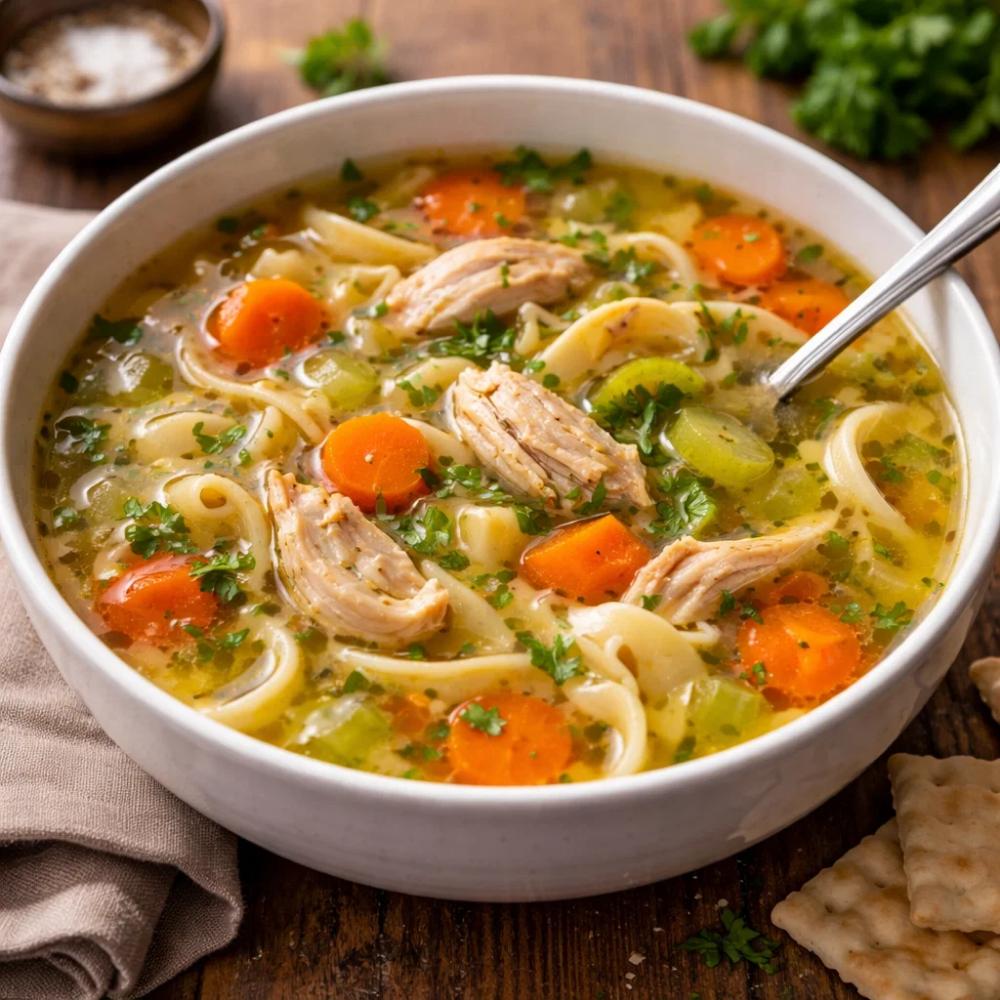
The gold standard of comfort food — a clear, golden chicken broth with tender shredded chicken, soft vegetables, and egg noodles. Genuinely restorative, deeply satisfying, and made entirely from scratch.
What is this dish?
Chicken noodle soup is America's most beloved comfort food — a clear, golden broth with shredded chicken, soft vegetables, and egg noodles that has been made as a restorative dish for generations. It transcends cuisine boundaries and exists in some form in almost every food culture. The American version is defined by its simplicity and warmth — a soup that exists purely to comfort and nourish.
Why you'll love it
Made from scratch, this soup is in an entirely different category from the tinned version. A genuine chicken broth made from bone-in chicken, a proper soffritto, and fresh egg noodles produces a depth of flavour that costs only slightly more in time than opening a can. Genuinely restorative and one of the best things to make when someone needs comfort.
When to serve
Chicken noodle soup is the first choice when anyone feels under the weather, but equally wonderful as a regular cold-weather dinner, comforting lunch, or starter at a simple family meal.
Quick tips
Use bone-in chicken — never boneless breast. Simmer gently, never boil. Skim foam in the first 5 minutes. Add noodles last. Finish with lemon juice. Store noodles separately if making ahead.
Bone-In Chicken (Thighs or Legs)
The source of the soup's golden broth — collagen from the bones dissolves during simmering, giving the stock a rich body and silky texture. The dark meat of thighs produces more flavourful, moist shredded chicken than breast meat.
Egg Noodles
The defining ingredient — traditional wide egg noodles have a soft, slightly eggy character that is the classic pairing with chicken broth. Add them last to prevent over-cooking.
Mirepoix (Carrot, Celery, Onion)
The holy trinity of Western soup-making — the same aromatic base used in French, Italian, and American cooking. Each vegetable contributes a different sweetness and flavour note to the finished broth.
Fresh Lemon Juice
The finishing touch — a tablespoon off the heat brightens the entire broth and gives the soup a lively, clean quality rather than the flat richness of an unseasoned stock.
Substitution Options
Rotisserie chicken replaces raw chicken for a faster version. Gluten-free pasta or rice noodles replace egg noodles. Parsnip can replace celery for a sweeter flavour. Fresh ginger (a 1cm slice simmered in the broth) adds a warming note. A splash of white wine added at the start adds complexity.
Step-by-Step Instructions
Cook the chicken
Place the chicken pieces in a large pot with the chicken stock. Add the bay leaf and thyme sprig. Bring to a boil, skimming any foam that rises to the surface. Reduce to a gentle simmer and cook for 25–30 minutes until the chicken is cooked through and falling from the bone. Remove the chicken pieces with tongs and set aside to cool. Discard the bay leaf and thyme.
Pro Tips:
- •Skimming the foam in the first 5 minutes produces a cleaner, clearer broth.
- •Using bone-in, skin-on chicken pieces adds significantly more flavour to the broth than boneless chicken breasts.
Sauté the vegetables
While the chicken simmers, heat the oil in a separate pan over medium heat. Add the diced onion and cook for 5 minutes until softened. Add the garlic and cook for 1 minute. Add this to the broth after removing the chicken, along with the sliced carrots and celery.
Pro Tips:
- •Sautéeing the onion and garlic briefly before adding to the broth develops more flavour than adding them raw.
- •Cut carrot and celery uniformly (5mm thick) so they cook at the same rate.
Shred the chicken and cook noodles
Once the chicken is cool enough to handle, remove and discard the skin and bones. Shred or pull the meat into bite-sized pieces. Simmer the vegetables in the broth for 10–12 minutes until tender. Add the egg noodles and cook for 6–8 minutes until just tender. Return the shredded chicken to the pot. Season generously with salt and pepper.
Pro Tips:
- •Shred the chicken with two forks — pull along the grain of the muscle for long, satisfying pieces rather than crumbled chunks.
- •Add the noodles in the last 8 minutes to prevent them from becoming too soft.
Finish and serve
Stir in 1 tablespoon of fresh lemon juice and the chopped parsley. Taste and adjust seasoning — the broth should be savoury and clear, with clean chicken flavour. Ladle into deep bowls, ensuring each bowl has chicken, vegetables, and noodles.
Pro Tips:
- •A squeeze of lemon juice at the end brightens the entire broth and is the finishing touch that makes the soup taste fresh rather than flat.
- •Warm the bowls before serving — chicken noodle soup should be eaten piping hot.
Chef's Tips
Techniques that separate good from great
Simmer the chicken gently — never boil
Chicken cooked at a rolling boil becomes tough and stringy as the proteins contract violently under intense heat. Gentle simmering at about 85°C allows the proteins to cook slowly and remain tender, while the collagen in the bones gradually dissolves into the broth. The texture difference between gently simmered and hard-boiled chicken is immediately apparent.
Use bone-in, skin-on chicken for maximum broth richness
Boneless chicken breast simmered in stock produces a broth with very little depth. Bone-in, skin-on thighs and legs contribute collagen (which gives the broth a rich, slightly gelatinous body), fat (which provides flavour), and Maillard products from the skin's surface. The resulting broth is golden, fragrant, and full-bodied rather than pale and thin.
Add lemon juice at the very end
A tablespoon of fresh lemon juice added off the heat brightens every element of the broth and gives the soup a clean, lively quality. The acid amplifies the perception of all other flavours. Add just enough to brighten, not enough to taste sour — typically 1–2 tablespoons for a large pot.
Keep noodles and soup stored separately
Noodles left in broth continue absorbing liquid, swelling until they are soft, starchy, and have drunk most of the broth. Storing them separately means the soup keeps its proper consistency and the noodles retain their texture. Add fresh-cooked noodles to each bowl when reheating.
Nutrition Facts
Equipment Needed
- Large pot (at least 4-litre)
- Tongs
- 2 forks (for shredding chicken)
- Ladle
- Knife and cutting board
- Measuring cups
Quick Tips
- Use bone-in, skin-on chicken pieces — the bones and skin contribute collagen and fat that produce a richer, more golden, gelatinous soup.
- Good chicken stock is the foundation — the soup is only as good as its stock. A homemade or high-quality fresh shop-bought stock produces a noticeably different result from a diluted stock cube.
- Add the noodles only in the last 8 minutes — they continue absorbing broth after cooking and become mushy if added too early.
Recipe Variations
Different ways to make this dish your own
Lemon Chicken Orzo Soup (Greek Style)
Replace egg noodles with orzo pasta. Add the juice of 1 full lemon at the end with 2 eggs whisked with lemon juice and streamed slowly into the hot soup while stirring (avgolemono technique) for a creamy, lemony, Greek-inspired version.
Asian-Style Chicken Noodle Soup
Add 2cm of sliced fresh ginger and 1 tablespoon of soy sauce to the broth. Replace egg noodles with rice noodles. Finish with sliced spring onions, a drizzle of sesame oil, and white pepper.
Chicken Noodle Soup with Dumplings
Drop 1 tablespoon-sized spoonfuls of a simple dumpling batter (flour, egg, milk) into the simmering soup in the last 15 minutes. They cook into soft, pillowy dumplings that make the soup a complete, hearty meal.
Tuscan Chicken and White Bean Soup
Replace the noodles with 1 can of drained cannellini beans. Add 1 can of chopped tomatoes, a handful of baby spinach, and 1 teaspoon of Italian seasoning. Finish with Parmesan and olive oil.
What to Serve With
Perfect pairings to complete the meal
Crusty Bread
Simple, good bread alongside chicken noodle soup turns it into a complete and satisfying meal.
Saltine Crackers
The classic American accompaniment — crispy crackers crumbled into the soup add texture and a salty crunch.
2 lemon wedges, to serve
Extra lemon wedges at the table for those who want a brighter, more acidic broth.
Chopped Fresh Parsley or Dill
A scattering of fresh herbs over each bowl adds freshness and colour — dill particularly is a natural pairing with chicken broth.
Storage & Make-Ahead
Keep it fresh and plan ahead
Refrigerator
Store soup and noodles separately for best results. The soup keeps for up to 5 days; noodles for 2 days. If stored together, the noodles absorb the broth and swell — add water when reheating.
Freezer
Freeze the soup without noodles for up to 3 months. Thaw overnight and add freshly cooked noodles when reheating.
Make-Ahead
The soup base can be made 3–4 days ahead. The fat solidifies on the surface in the fridge — spoon off for a cleaner broth, or stir back in for more richness.
Reheating
Reheat gently in a saucepan over medium heat until piping hot. Add freshly cooked noodles to each bowl rather than reheating leftover noodles in the soup.
Be the first to review this recipe!
Got Leftovers?
Turn what you already have in your fridge into delicious meals. Our AI-powered generator creates personalized recipes from your ingredients.
Browse more like this:
You Might Also Like
Discover more delicious recipes similar to what you're cooking