Butternut Squash Soup (Creamy and Velvety — 4 Ingredients)
An impossibly silky, sweet-savoury butternut squash soup made from just roasted squash, stock, garlic, and a touch of cream. The simplest impressive soup you can make — naturally velvety without any thickener.
What is this dish?
Butternut squash soup is one of the most beloved autumn and winter soups in British cooking — naturally sweet, brilliantly orange, and with a silky, velvety texture that comes entirely from the squash itself without any added thickener. Made correctly, with roasted rather than boiled squash and good stock, it is a remarkably elegant soup from very modest ingredients.
Why you'll love it
This soup requires almost no technique — roast, blend, cream, serve. The squash does all the work. The result is a visually stunning, naturally sweet, silky soup that looks and tastes like it requires more effort than it does. Under £4 for four generous portions and one of the best soups to make ahead.
When to serve
Butternut squash soup is the perfect autumn and winter soup — for weeknight dinners, dinner party starters in small cups or glasses, Halloween gatherings for its vivid orange colour, or as a warming meal with crusty bread. Its natural sweetness makes it universally appealing.
Quick tips
Roast the squash until the edges are genuinely caramelised. Use unpeeled garlic roasted alongside the squash. Blend as smooth as possible — use a countertop blender if available. Balance the sweetness with adequate salt. Do not boil after adding cream.
Butternut Squash
The entire foundation — provides natural sweetness, brilliant orange colour, thick body from starch, and a creamy texture when roasted and blended. Choose a squash that feels heavy for its size — denser flesh means less water and more flavour.
Roasted Garlic
Roasted unpeeled alongside the squash, the garlic becomes sweet, creamy, and mellow — adding depth and complexity without any raw sharpness. Do not use raw garlic in this soup.
Ground Nutmeg
The classic spice partner for squash — a small amount of freshly grated or ground nutmeg adds a warm, slightly woody, sweet spice note that emphasises the squash's natural character without overpowering it.
Double Cream
Added after blending to provide a silky richness and dairy sweetness. A small amount is sufficient — the squash provides the body. Crème fraîche adds a pleasant tanginess as an alternative.
Substitution Options
Pumpkin, Crown Prince squash, or red kuri squash can replace butternut squash — all produce excellent results with slightly different flavour profiles. Coconut cream replaces double cream for a vegan version. Ground ginger replaces nutmeg for a warmer, more Asian-influenced flavour. Sweet potato can replace half the squash for a slightly different but equally good result.
Step-by-Step Instructions
Roast the squash
Preheat the oven to 200°C (400°F). Spread the cubed butternut squash and roughly diced onion on a large roasting tray. Nestle in the unpeeled garlic cloves. Drizzle with olive oil, season generously with salt, pepper, and nutmeg. Toss to coat. Roast for 35–40 minutes until the squash is completely tender, caramelised at the edges, and a skewer passes through without resistance.
Pro Tips:
- •Don't crowd the roasting tray — squash needs space to roast and caramelise, not steam. Use two trays if necessary.
- •The caramelised edges of the roasted squash are where the deepest flavour concentration is — let them develop fully.
Blend with stock
Transfer the roasted squash and onion to a large saucepan. Squeeze the soft roasted garlic flesh from the skins directly in. Pour in the stock. Use a stick blender to blend until completely smooth. For ultra-smooth results, blend in a countertop blender in batches (fill no more than halfway with hot liquid). The soup should be velvety, thick, and smooth with no chunks.
Pro Tips:
- •Roasted garlic adds sweetness and depth without any raw garlic sharpness — always squeeze it out of the skins.
- •A powerful countertop blender produces a significantly smoother result than a stick blender for squash soup.
Add cream and warm through
Return the blended soup to the pan over low heat. Stir in the double cream or crème fraîche. Warm gently for 3–4 minutes — do not boil. Taste and adjust seasoning with salt, pepper, and an extra pinch of nutmeg if needed. The soup should be gently sweet from the squash, savoury from the stock, and warm with nutmeg.
Pro Tips:
- •Do not boil after adding the cream — the soup can separate and develop an unattractive grainy texture.
- •Butternut squash is naturally sweet — the soup may need very little additional seasoning beyond salt and the spices.
Serve
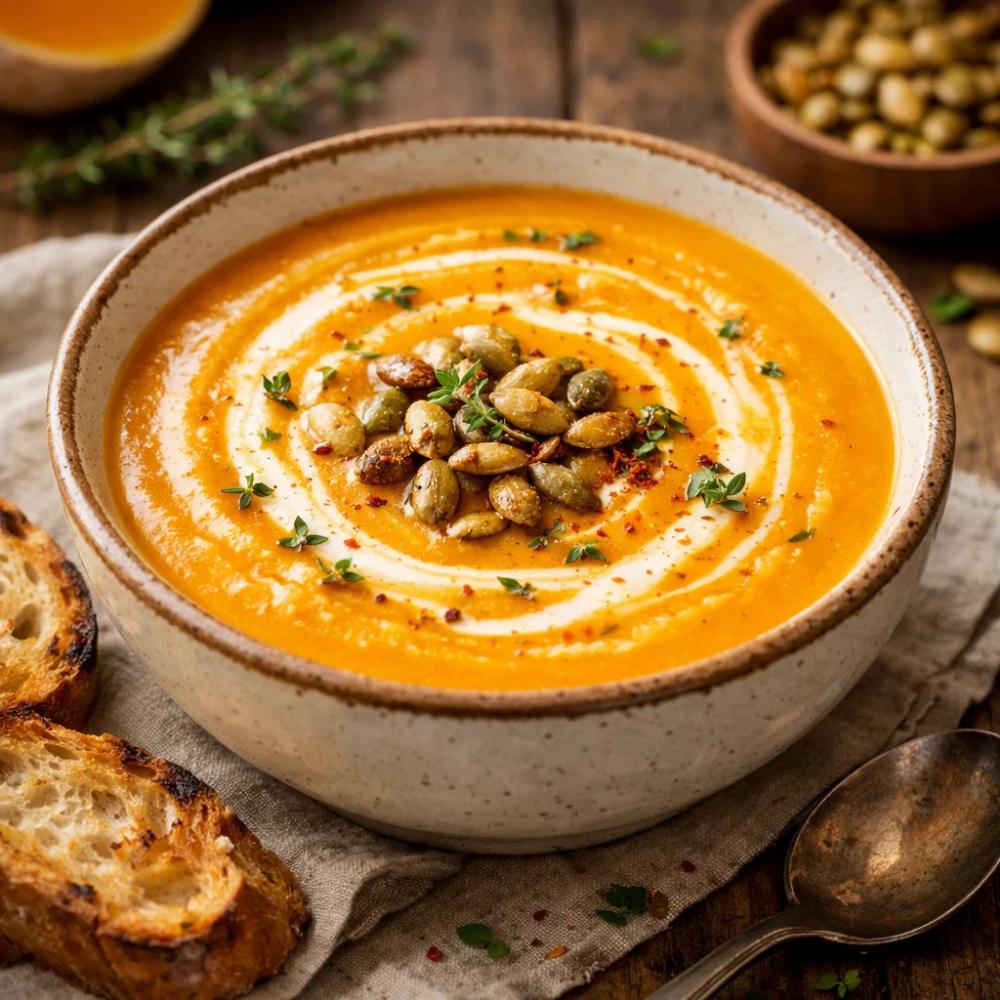
Ladle into warm bowls. Swirl a little extra cream or crème fraîche over the top. Drizzle with extra virgin olive oil. Scatter toasted pumpkin seeds and a dusting of smoked paprika over the surface. Serve with crusty bread.
Pro Tips:
- •Toasted pumpkin seeds add crunch and a nutty flavour that contrasts beautifully with the silky, sweet soup.
- •Warm the bowls before serving — butternut squash soup cools quickly due to its high sugar content.
Chef's Tips
Techniques that separate good from great
Roast the squash until the edges are properly caramelised
The most common mistake with butternut squash soup is insufficient roasting time. The squash must be cooked until the edges are genuinely caramelised and the flesh is completely soft — about 35–40 minutes at 200°C. This concentrates the sugars, creates Maillard compounds on the cut surfaces, and produces a deep, complex sweetness that blended raw or boiled squash cannot replicate.
Use a countertop blender for maximum smoothness
Butternut squash soup benefits more from a powerful countertop blender than almost any other soup. The high starch and fibre content of the squash requires significant shear force to fully break down into a genuinely velvety, smooth consistency. A stick blender leaves micro-fibrous particles that give the soup a slightly rough texture. Two minutes in a high-powered blender produces a soup that pours like liquid silk.
Balance the sweetness with salt, not just more stock
Butternut squash is very sweet, and the soup can taste one-dimensional without sufficient salt to counterbalance. Add salt generously and taste repeatedly. A pinch of smoked paprika or a few drops of hot sauce at the end also helps to interrupt the relentless sweetness and add complexity. The soup should taste sweet-savoury, not sweet-sweet.
Add garlic roasted rather than raw or sautéed
Raw garlic blended into squash soup creates a harsh, sharp flavour that fights with the natural sweetness of the squash. Roasted garlic cloves (unpeeled, caramelised over 35–40 minutes alongside the squash) become soft, sweet, and mellow — contributing depth and complexity without any of the sharpness that distinguishes it from the squash's natural sweetness. Always roast, never add raw.
Nutrition Facts
Equipment Needed
- Large roasting tray (or two)
- Large saucepan
- Stick blender or countertop blender
- Wooden spoon
- Ladle
- Small frying pan (for toasting pumpkin seeds)
Quick Tips
- Roasting the squash rather than boiling it concentrates the sugars and creates caramelised flavour compounds that give the soup an extraordinary depth — boiled squash produces a flat, one-dimensional result.
- Don't rush the roasting — the squash needs to be fully tender with caramelised edges before blending. Under-roasted squash tastes bland.
- Butternut squash is naturally sweet — balance this sweetness with adequate salt and a pinch of smoked paprika or chilli flakes.
Recipe Variations
Different ways to make this dish your own
Spiced Butternut Squash Soup with Coconut
Add 1 teaspoon of ground cumin, 1/2 teaspoon of ground coriander, and 1/4 teaspoon of chilli flakes to the roasting tray. Replace double cream with 100ml of coconut milk. The warm, spiced-coconut version is particularly popular.
Butternut Squash and Apple Soup
Add 2 peeled, cored, and diced Bramley apples to the roasting tray alongside the squash. The tart apple acidity and sweetness interplay with the squash in a beautiful, complex way.
Roasted Butternut Squash Soup with Sage Brown Butter
Brown 50g of butter in a pan with 6 fresh sage leaves until the butter is nutty and the sage is crispy. Drizzle this over the finished soup instead of olive oil. The nutty, aromatic sage butter is an exceptional pairing with the sweet squash.
Thai-Style Butternut Squash Soup
Add 1 tablespoon of red Thai curry paste and 200ml of coconut milk. Omit the cream and nutmeg. Finish with fresh coriander and a squeeze of lime. A bold, vibrant variation.
What to Serve With
Perfect pairings to complete the meal
Crusty Sourdough or Ciabatta
Bread for dunking into the sweet, silky soup — a thick, crusty slice is the ideal accompaniment.
Toasted Pumpkin Seeds
Scatter toasted pumpkin seeds over the soup for crunch, a nutty flavour, and visual contrast to the smooth, orange surface.
Crème Fraîche Swirl
A spoonful of crème fraîche swirled into the bowl with a toothpick creates a simple, visually elegant garnish and adds a pleasant tanginess.
Smoked Paprika Dust
A light dusting of smoked paprika over the cream swirl adds a subtle smokiness and a dramatic colour contrast of orange and red.
Storage & Make-Ahead
Keep it fresh and plan ahead
Refrigerator
Store in an airtight container for up to 5 days. The flavour improves overnight as the squash and spices continue to develop.
Freezer
Freeze before adding the cream for up to 4 months. The soup freezes excellently. Add fresh cream when reheating from frozen.
Make-Ahead
Ideal for making ahead — make the complete soup 1–2 days ahead and refrigerate. Add fresh cream garnishes and toppings when serving.
Reheating
Reheat gently in a saucepan over medium-low heat, stirring regularly. The soup thickens on standing — add a splash of stock or water if needed to restore consistency. Do not boil once cream has been added.
Be the first to review this recipe!
Got Leftovers?
Turn what you already have in your fridge into delicious meals. Our AI-powered generator creates personalized recipes from your ingredients.
Browse more like this:
You Might Also Like
Discover more delicious recipes similar to what you're cooking